One of the laws of being rubbish at blogging is that pretty much every other post has to be a pitiful set of excuses about why you’ve not posted anything recently, and that you’ll get back to it soon, for serious this time you guys, etc.
Except that, this time, I’m not doing that. You know why? Because my excuses are AWESOME.
And then, after that, I went on honeymoon. To Borneo. For 3 weeks.
It was THE BEST.
I’m planning (hah!) to do a few posts on my trip, but for now I’ll leave you with a few photos from the first national park we stayed in, Sarawak’s rather amazing Bako NP.
Obligatory fly porn
Silver leaf langur
A fiddler crab celebrates his victory
Cicada : banana interface
Flying lemur!
One of many stick insects
Pit viper
A rather lovely butterfly
Bearded pig enjoys a sunset stroll on the beach
Proboscis monkey
Big spider, chomping on something that was also quite big.
Tiny jumping spider eating a wasp.
I’m pretty glad I invested in a new camera before going away – it was an incredible place to visit.
As for now, I’m gearing up to head off to Lisbon for ESEB 2013 – my poster is waiting to be printed, so now I just have to send begging emails to really smart people in the hope that I can get them to stand near me and I can gain knowledge from them via osmosis (or talking to them, whichever feels less weird at the time).
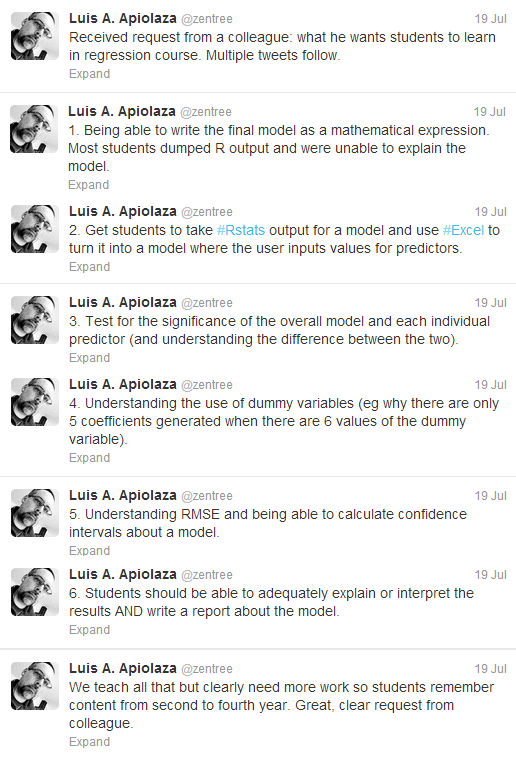
On Twitter yesterday, Luis Apiolaza shared some tips that he’d given a colleague on what students should learn in a regression course. These are pretty great, so I thought I’d include them as a post here (mostly because that’s useful for me, but also because it’s as if I’ve written a blog post when all I’ve done is screen-grabbed some guy’s twitter feed). Luis is a quantitative geneticist and lecturer at the School of Forestry in Christchurch, New Zealand, wrote the ASReml (and ASReml-R) cookbook, runs the excellent Quantum Forest blog that has a general theme of data analysis, is good at the twitter, and – to quote Justin Bieber’s most recent analysis of Bill Clinton – is a ‘#greatguy’*.
* Coincidentally, I also had a turnaround of my views on Apiolaza after video emerged of me exiting a computing lab with a group of unruly S+ users, urinating into a paper recycling bin, spraying cleaning fluid onto a print-out of the ASReml cookbook, and shouting ‘F*ck Luis Apiolaza!’.
Before I depart these shores for a few weeks, allow me to take a quick opportunity to do some ranting. It’s against something that anyone working in the field of sexual selection will likely have done, and definitely will have seen. It’s predictable, it’s lazy; it’s also entirely innocuous and not something anyone should really care about. Therefore, I’m furious, I hate it, and it must be stopped.
I am talking, of course, about the use of pictures of peacocks on the opening slides of a presentation.
Oh, and sidling along apologetically shortly afterwards will likely be Darwin himself, and the famous quote from his letter to Asa Gray (preferably in a flowery typeface):
“The sight of a feather in a peacock’s tail, whenever I gaze at it, makes me sick!”
This is generally used to set the scene for discussion of Darwin’s idea of sexual selection, particularly in terms of female choice for spectacular males: that fantastic male ornaments exist because females prefer to mate with the best-ornamented males. However, you may have noticed that a reference never pops up onscreen whenever the speaker blithely proclaims that sexual selection explains the existence of the magnificent peacock’s feathers. Evidence for the influence of train-feather eyespots on male mating success is somewhat conflicted*, and, intriguingly, peacocks have actually been useful in providing evidence for the loss of male ornaments over time. Now, don’t go thinking that I’m about to get all Joan Roughgarden on the general principles of sexual selection, nor that I’ll join the creationist school of thought that a failure to find good evidence of something in a single species at a given time somehow disproves a large, well-studied theory with a mountain of evidence across a huge variety of taxa. It just seems to me that, given Darwin spent 20 years accumulating evidence with which to back up his theory of natural selection**, he was probably a bit of a stickler for data.
So, with what should we replace the magnificent peacock when discussing female preference for male ornaments? Well, first let’s set a little scenery of our own, by looking at the history of sexual selection theory. Darwin outlined his thoughts on the evolution of male traits for enhancing reproductive success in ‘On the Origin of Species’; he then detailed it thoroughly in 1871’s ‘Selection in Relation to Sex’, which was published alongside ‘The Descent of Man’ (criminally, some people still prefer to read the book on human evolution, which is INSANE). It attracted much interest, and no little criticism – particularly from Alfred Russel Wallace. While there are noble efforts going on just now to ensure that Wallace gets a little more of his deserved share of recognition for the theory of evolution by natural selection, he certainly had a far more dour view of the animal kingdom than did Darwin. In fact, Wallace’s views led to around a century in which sexual selection was sadly neglected – despite the occasional foray into theory by the likes of the great statistician Sir Ronald Fisher – and natural selection was treated as the only real mechanism behind evolutionary change.
Wallace’s raging adaptationism meant that he tried to ‘explain away’ colourful ornaments; the idea that a simple female preference could overcome the power of natural selection was anathema to him. For example, it was his belief that, in many birds and other species with ornamented males, the colourful state was ‘normal’, an unselected side effect from the greater ‘vigour’ of males in comparison to females (which he also used to explain male displays in the breeding season, during which they were – presumably – excessively ‘vigorous’!). The females, meanwhile, were selected to be camouflaged in order to protect the nest. Helena Cronin deals with this period in fantastic detail in her book ‘The Ant and the Peacock’, and provides a telling summary when she remarks that Wallace “excelled in understanding the dull, the drab and the dowdy”.
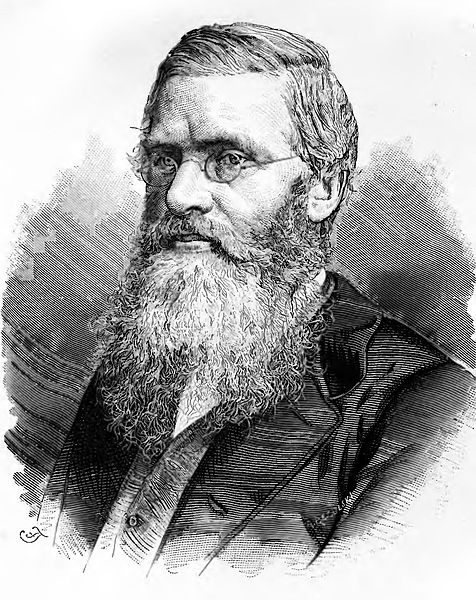
Alfred Russel Wallace: so miserable, he only allowed himself to be drawn in monochrome.
It was not until 1982 that female preference for ever more extravagant traits was explicitly tested, when the Swedish biologist Malte Andersson stepped out into the Kenyan grassland, armed only with a pair of scissors and a pot of glue. Many years before, Fisher had proposed that female preference might be such that it could push a male ornament into ‘runaway’ status, whereby it would continue to become exaggerated until finally curtailed by natural selection. Andersson had come up with an ingenious experiment that would finally test whether this hypothesis. He wandered out into widowbird territory, and caught himself a whole bunch of fancy males. Next, Andersson clipped the tail feathers from a group of these birds, and then glued a small length of feathers back onto them (making short-tailed males); he also glued remaining clippings onto the tails of others (creating super-long-tailed males). He also – in a classic lesson in experiment design – had two groups of ‘normal-length’ tails, in which one group had their tails cut off and then glued back on again. This was to check whether some part of that process could be responsible for results, not because Swedish biologists are unnecessarily cruel and unusual. The other control group was left alone, their tails unmolested. Then back into their marked territories they went, to display for watching females.
An hour after the birds were released, Andersson counted the number of nests on each territory; he then continued to inspect these territories for active nests on a weekly basis. An active nest is indicative of whether a female has mated with the male on that particular territory. Before having modified the tail treatments, Andersson had found only minor differences between the mating success of males, but afterwards he was struck by the huge increase in active nests of those males with elongated tails compared with all others. Having excluded territorial and behavioural differences (through randomisation, controls, and behavioural measurements), he concluded that females really were selecting males based on this seemingly arbitrary trait. Note that this experiment does not say why females were choosing the males with the longest tails, only that they were choosing them. The use of extra-long tails also showed that female preference went above and beyond the current range, as Fisher had hypothesised. The tail of the widowbird gave the first real evidence that male traits are favoured by female choice, and likely evolved through this mechanism.
But, back to my main point. Am I saying that we should simply replace all instances of peacocks with widowbirds? No, no I’m not. But when we talk about sexually selected traits, we’re often talking about weird ornaments, things that really shouldn’t exist, but do, and in “endless forms most beautiful and most wonderful”. We want to know why these things have evolved, in such varieties and with such incredible diversity. If we restrict ourselves to the same example over and over again, we are simply doing a disservice to the field in which we are privileged enough to work. Again, I point you to Malte Andersson, but this time to his wonderful 1994 ‘Sexual Selection‘ monograph; not only does he detail sexual selection theory from his well-placed vantage point, he also provides enough examples of well-studied, bizarre, intriguing animals to fuel your opening Powerpoint slide dreams for many conferences to come…
* Although, while I was writing this then I noticed Ros Dakin’s new research, but I was already ranting so let’s just pretend that didn’t happen or something. Also, she’s done some work on royal flycatchers! Sweet zombie jesus, they are THE BEST.
** remember, The Origin of Species was an ABSTRACT for the complete book that he had planned for his theory! If we have one thing to thank Alfred Russel Wallace for, it’s that he forced Darwin’s hand into this abridged version. I mean, come on.
UPDATE: below is my favourite response to this post so far…
Just as well-timed, Samuel Orr of Motionkicker has released a short video that summarises the life-cycle of these incredible bugs. This is linked below, and it’s fantastic, but it’s just a taste of what might come; he’s looking to raise money to create an hour-long documentary that really details the various different broods of cicadas across the world. His Kickstarter page is a real lesson in how to try to raise funds in this fashion: the video showcases what he can do, and there is a detailed run-down of where any money would go in this project. Plus, you get stuff for your money! So, if you enjoy the video, you should head on over and send Samuel some cash, so that he can document these little guys before we have to wait another 17 years…
It has been quite some time since I posted anything on my blog, but rather than providing a long whinge about why this is so (and because ‘I’ve been busy’ doesn’t really cut it at any stage once you’ve decided to plough into the academic lifestyle), I thought I would use the experience of the last couple of months to give some handy hints to other students on a topic I have good experience of: surviving long, complicated, tedious, lonely lab experiments. As in, 8-13 hours per day, every single day of the week, for several months, in a small room by yourself, kind of experiments. The real glamour of PhD life.
1) Let yourself go
Me in my dungeon
Because nothing tells your colleagues that you’re working hard like a terrible beard (not sure what the female equivalent is, I’m afraid), and the red eyes that indicate a person running on caffeine fumes. Over the last couple of months, I’ve lost over 6kg accidentally, purely from being too busy to eat lunch. Not that I’m asking for sympathy, because I’d got a bit fat beforehand – this just means I don’t have to start running again. SCORE.
2) Give your ears a treat
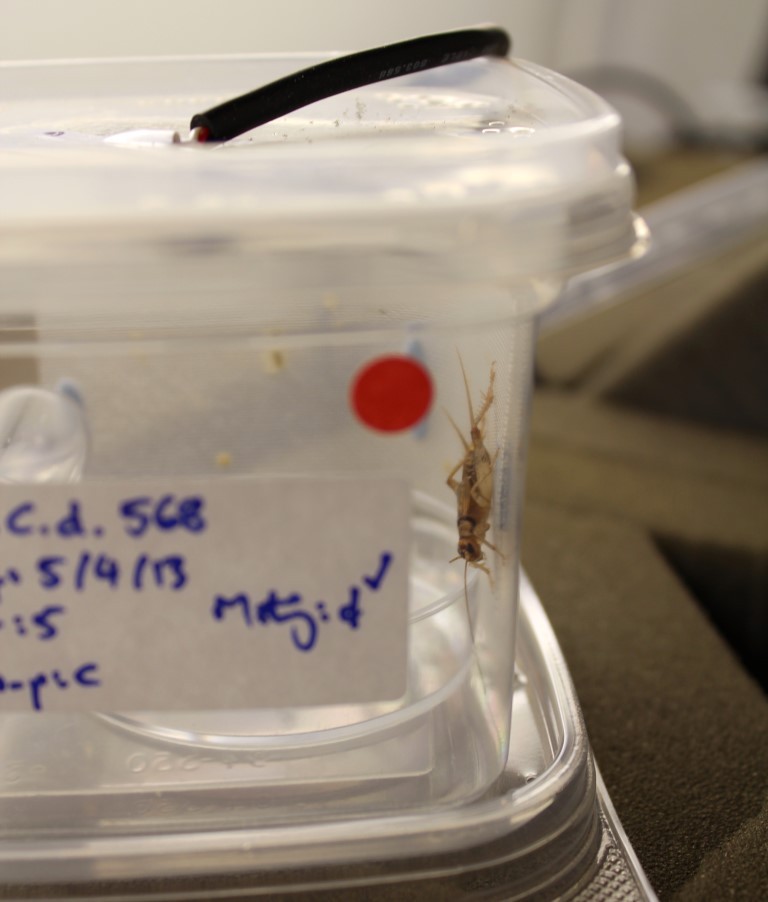
Your hands and eyes may be focused on some monotonous task – like, say, putting tiny food dishes into many boxes which each hold a single insect, just as an example I made up for no reason at all – but your ears are still free to feast upon the glorious smorgasbord that is the collected works of human endeavour (or something). You can raid iTunes U for lecture series, catch up on your favourite podcasts (and a bunch that you don’t really like, but you’re so tired that you can’t bring yourself to search for better ones), or – and this has revolutionised my recent listening – sign up for an Audible audiobook account. If you’re going to be stuck in a lab by yourself for hours on end, you can even get through audiobooks that you would otherwise baulk at, which is how I managed to power through all 57 glorious hours of the unabridged version of David Foster Wallace’s ‘Infinite Jest’.
Audiobooks I enjoyed:
‘Infinite Jest’ by David Foster Wallace
‘The Greatest Show on Earth’ by Richard Dawkins
‘Snow Crash’ by Neal Stephenson
‘Life on Air’ by David Attenborough
‘The Human Stain’ by Philip Roth
…also, ‘How to be a Woman’ by Caitlin Moran, although this is not necessarily the wisest choice when spending many hours in the dark, by yourself, and feeling a bit confused about everything in general.
3) Take your birding when you can get it
Birds are great, and if you don’t think so then YOU ARE DEAD INSIDE. I filmed this from the lab window, having spotted this dust-up on a short break from my sealed-off dungeon to weigh a bunch of crickets (the only lab scales are upstairs). I really need to thank the guys in the BTO office down the hall for having put a bird feeder outside…
4) Walk to work
This enables you to get the bare minimum of sunlight and fresh air that you probably need, and also stops your muscles from completely atrophying. Hopefully.
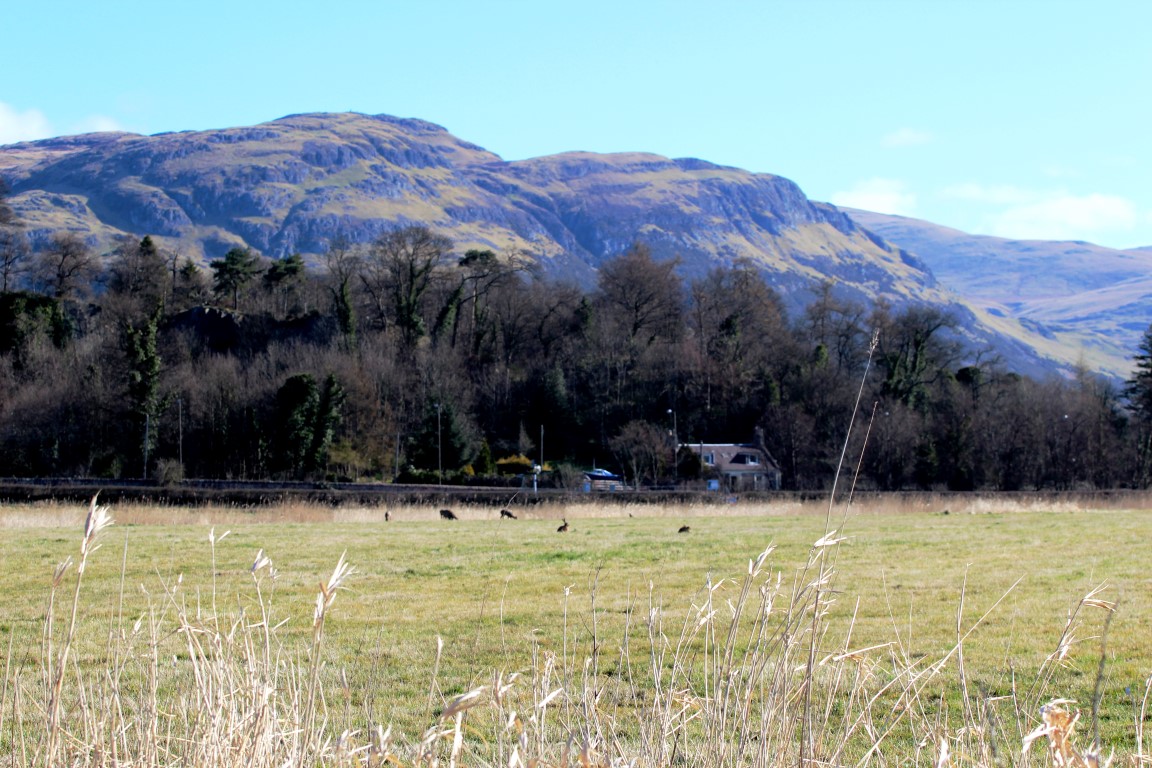
It also helps if your ‘commute’ looks like mine.
Just some hares and some deer hanging out in front of the Ochils. No big deal.
5) Take your animal behaviour when you can get it
We all like watching animals do stuff, right?
Even if you’re restricted to just watching your study organism over and over again, it still counts.
6) Pretend everything is fine
I don’t want to get all ‘the power of positive thinking’ or any bullcrap like that, but there’s a lot to be said for just deciding not to be in a huff when you get home from 13 hours slogging away in the lab and not having spoken to anyone all day. If you have a partner, they’ll certainly thank you for it. Or at least be less likely to break up with you because you are being massively insufferable.
7) Arrange something at the end to look forward to
I’m getting married, but maybe you don’t want to plan for that every time you start designing a long experiment. We are then going to Borneo for three weeks as well. You probably can’t plan for that either, but at this point, I don’t care about you. I don’t care about any of you. I just care about MY DATA.
Oh, and try not to think about the fact that you’ll probably spend the next 6 months trying to do statistical analysis and work out what any of it means. HAHAHAHAHAHAHAWHYYYYYYYY
Anyone who knows me, or follows me on twitter, will be aware that I continue to fight a losing battle against the mainstream and its hideous mammal bias. The joy I felt when I found a twitter account named ‘Mammals Suck‘! The despair when it turned out to be a pun, because the person running it is Harvard assistant professor Katie Hinde, who studies MILK. She’s the worst*.
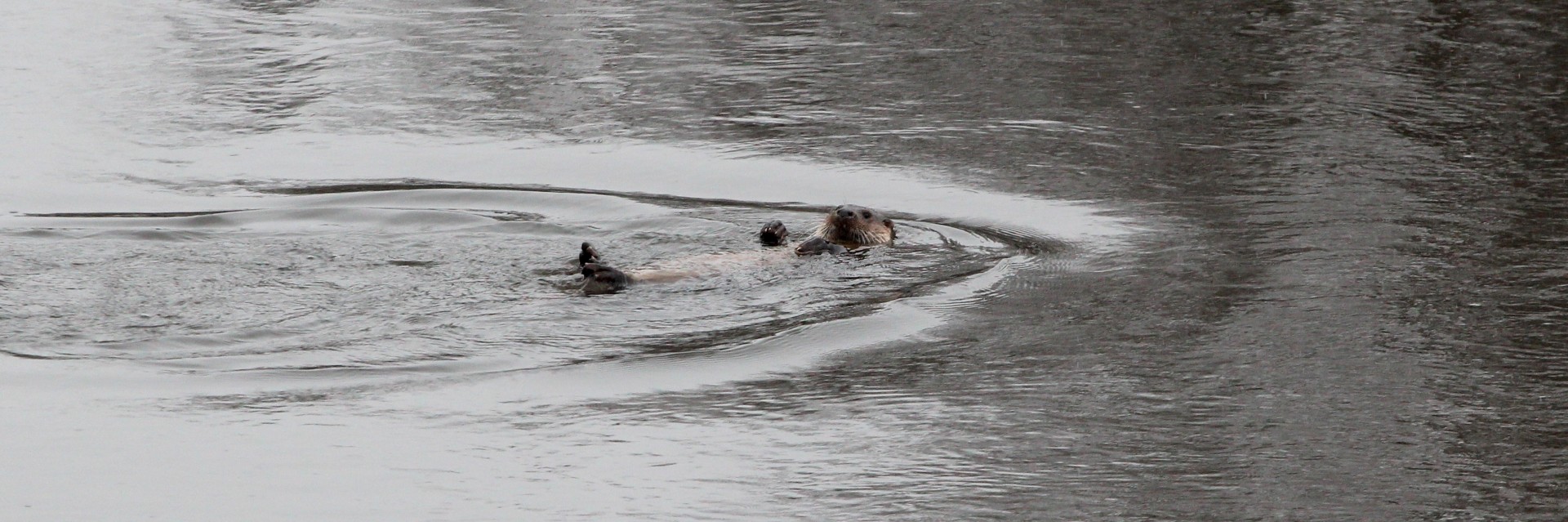
But I have a secret weakness, and that weakness is for otters. Now there is an otter living in the river outside my flat.
Just look at this guy.
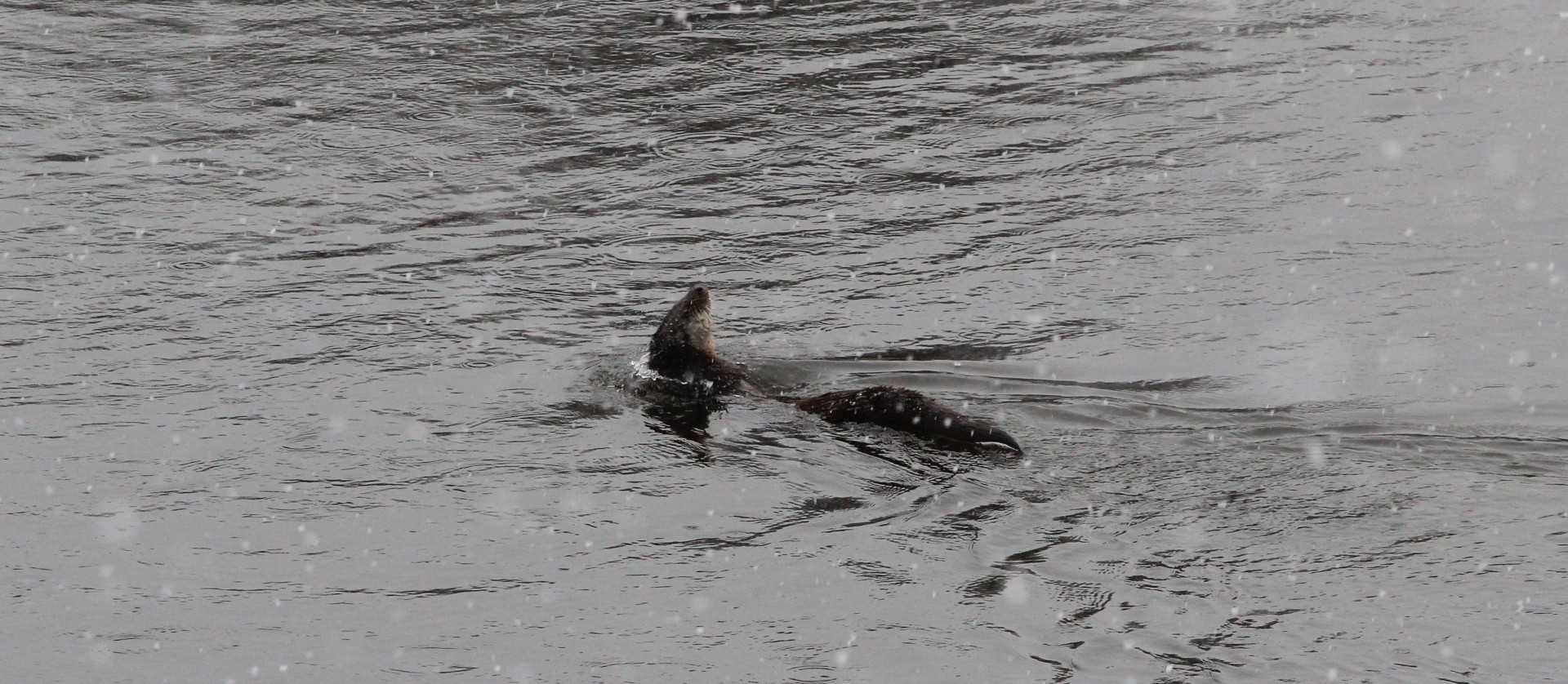
Enjoying a little swim in the snow.
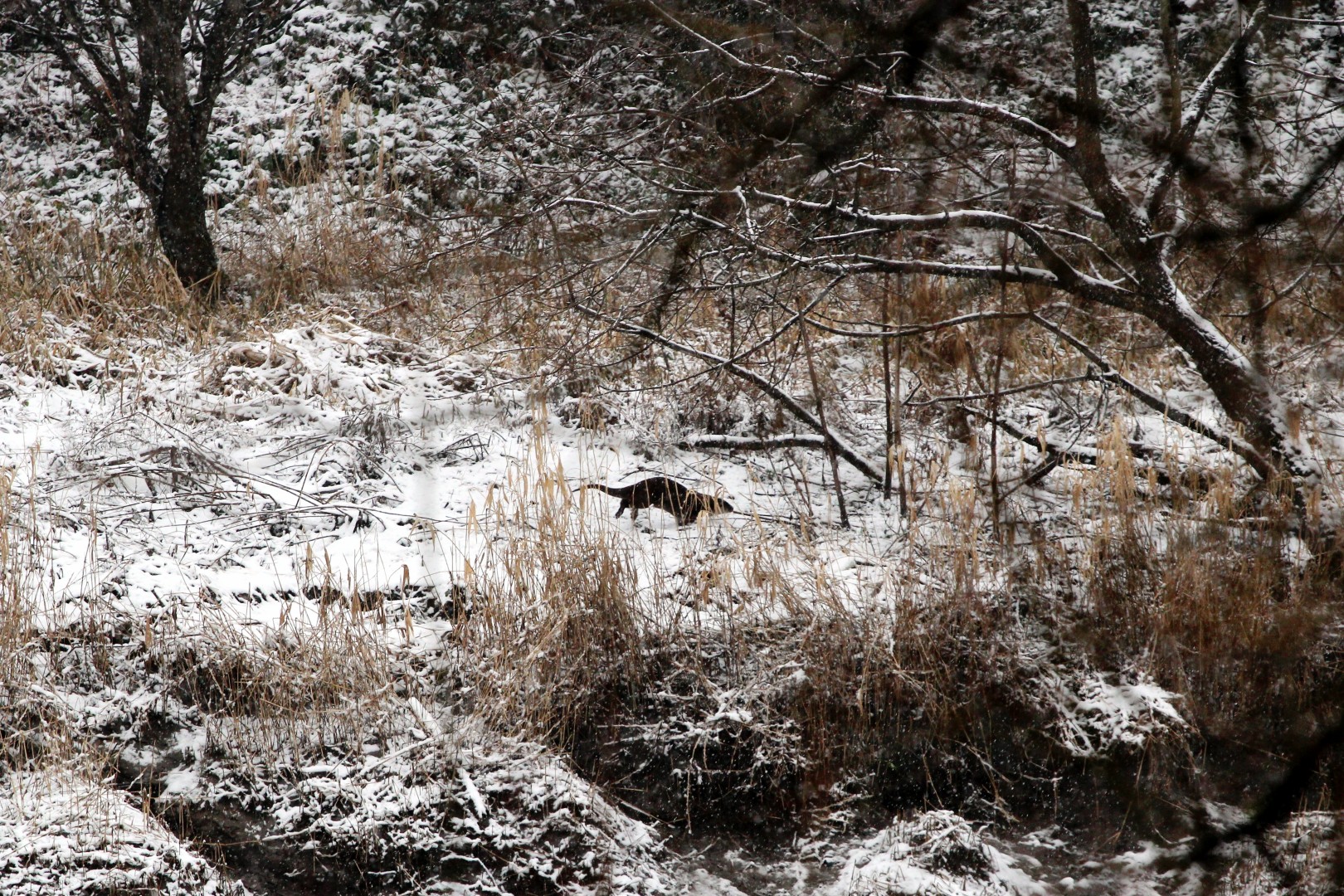
After it bounded past the tree, it just rolled about in the snow for a while, having an awesome time.
At least I have a trump card to play when it comes time to put the flat on the market…
OH GOD I LOVE OTTERS
Let us never speak of this again.
*Of course, Katie is actually awesome. Just check out this video of her ‘Harvard Thinks Big’ talk.
Ah, the humble flower. Often surrounded by kin, allies and potential partners, yet always somehow alone. Straining in the wind for a gentle touch, the slightest caress, yet all around surge away as one. What happens when, every time you reach out, all others move aside? Do you dare to hope, to dream, that there is another flower out there, one just like you, one with which to share your thoughts and dreams and aspirations and, most importantly, your gametes?
Just as a shy teenager, crippled by insecurity, might ask a friend to pass a message on to the object of their desire in a school classroom, so plants may harness the power of proxy. Insect pollinators, buzzing from flower to flower with a gametic note attached, are often bribed with food rewards of nectar or pollen as part of this sexy bargain. However, in another parallel with some sullen human adolescents, orchids despise such brazen capitalist tendencies.
Instead, they lure these pollinators, their little sex proxies, with sweetly perfumed and brightly coloured promises of food, promises they will never come good on. But this is not deception enough for some orchids, no. In a cruel twist, they can actually mimic the sex pheromones of the female of a particular insect species, driving the males wild with lust. The orchid’s labellum even imitates the look of the seductive female, tempting the male over to attempt copulation. And as he does so, grinding away in an ultimately fruitless pseudocopulatory frenzy, the orchid gently attaches some pollen to him, to be passed on to the next player in this nefarious reproductive game.
The image above shows the wasp Neozeleboria cryptoides attempting copulation with the “bird orchid”, Chiloglottis valida. The flower mimics the sex pheromone of a female wasp so precisely that the male cannot distinguish between the mimic and the real deal. In one genus of Australian orchids (Cryptostylis), the wasp can even be provoked into ejaculating with the orchid.
You may say to yourself, why sully yourself in such a manner? Why not just pay for this service? And isn’t allowing a wasp to engage in intercourse with you to the point of ejaculation akin to a warped form of bestiality?
To which the orchid would sigh, close its black moleskine notebook, and gaze up at the Che Guevara poster on its wall. Don’t push your human morality on me, man, it says. You just wouldn’t understand.
More information on orchid pollination can be found here.
The original image was provided by and is the copyright of Mike Whitehead, who studied this system in Australia for his PhD, and from whom I first learned all about this weird shit when we met at ESEB 2011. You can follow him on Twitter, and also be sure to check out some more of his excellent photographs of thisparticularspecies in action.
This was originally posted on my other website, NatureSexTopTips, which is no longer active.
I have started a new ‘tradition’ at home, in which I create a calendar of some photos that I’ve taken over the previous 12 months; I just finished the one for this year, so thought that I’d put up the photos that I have selected (including a couple of bonus mammal shots to round out the animal groups a little…!).
In 2012, I’ve been lucky enough to travel around Scotland a fair amount, and got a few nature firsts here – crossbills, vivaparous lizards, and finally saw the magnificent capercaillie (and ran away from it as it chased me and a very famous evolutionary biology professor up a path!). I also went to Sweden for a quantitative genetics workshop (where I learnt to love long johns as much as matrix algebra), took a trip to Canada (where I gave my first talk at a major international conference, Evolution 2012), and holidayed in Barbados (where Kirsty and I celebrated our engagement). The final bonus photo in this gallery is actually from 2013, and I hope it is a portent of good things to come!
A butterfly in Farley Hill National Park, Barbados.
Thousands of gannets nest on Bass Rock, an island in the Firth of Forth, Scotland.
A crossbill in the Cairngorms National Park, in the Highlands of Scotland.
A rogue male capercaillie in Speyside, Scotland; this guy chased myself and Professor Doug Futuyma up the path several times!
A dragonfly takes a breather by the river in High Park, Toronto.
A hairy crab on the beach at Bathsheba, Barbados.
Green-throated carib hummingbird, Barbados.
Long-horned beetle feasting on red berries in High Park, Toronto.
Anolis lizard checking out the new guests in our hotel in Barbados.
Gray kingbird looking nonplussed by the weather in Barbados (hurricane season).
A crab spider sucks the juices out of its prey, in Canada.
A juvenile red-winged blackbird in High Park, Toronto.
Waxwings strip the trees bare, in the glamorous location of Morrison’s supermarket car park, Stirling, Scotland.
Bonus picture #1: my first ever bear sighting! In Canada, of course…
Bonus picture #2: taken today, an otter exits the river right outside my flat!
I’m going to post this to Alex Wild’s request for end-of-year photo sets as well; mine certainly won’t compete with most of those on show, so you should go and check them out! There is some RIDICULOUS stuff going on. Hopefully I’ll have a competitive selection next year, as I’m off to Borneo in July for my honeymoon! That’s right: I’m getting married, like a real grown-up person.
Note: I’ve noticed that various people have ended up here after searching for rogue capercaillie in Speyside… I can’t give out the location myself, but I will say that we were taken there by a local wildlife guide, Steve Reddick, who was an excellent host and whose rates are also extremely reasonable!
That’s correct, friends – the two beetles you see in this image are both adult males of the same species of dung beetle, Onthophagus nigriventis. The chap on the right is clearly larger, and has a rather ostentatious horn extending from his thorax. This horn is a sexually-selected trait: horned males can use their armaments in battles over females, driving rivals away from mating sites, and even prying other males off a female whilst in flagrante. Sexual selection is all about the struggle to reproduce, and so traits are ‘sexually selected’ if their expression confers some benefit to the holder in terms of reproduction. In this case, large males with large horns are more likely to win battles with rivals, enabling them greater access to females, so there is a clear advantage to investing resources into weapons development.
Given that big, horned males fight rivals and guard their female partners (they may engage in the rather ungentlemanly pursuit of trapping lady beetles in mating burrows in order to have their way with them), then what the crap is going on with the guy on the left? Well, these horns are likely expensive in terms of resources, and any energy ploughed into growing horns is not available for investing in other traits – indeed, horns are known to trade off against morphological structures including eyes, antennae, and wings. Species of Onthophagus are well known for the size and diversity of their horns, but often these are only expressed by the largest ‘major’ males. What happens, then, if you’re a down-on-your-luck, resource-starved ‘minor’ male? Is there really any point in cashing in your precious metabolic chips for a gamble on a crappy little horn that’s never going to help you win any contests anyway? Surely there’s another strategy to be taken?
Indeed there is, and it’s called being a ‘sneaky fucker’*. While some males guard their mates, others will try to ‘sneak’ copulations with females. We now enter the realm of sperm competition: females may mate with multiple partners, so there is a battle amongst the sperm within her reproductive tract to fertilise eggs. If ejaculates are costly, males have to trade off resource investment on gaining fertilisation with investment on gaining additional matings. The more sperm ejaculated in a mating, the more eggs are likely to be fertilised – but, again, this requires resource investment. Furthermore, an increased risk of sperm competition should favour the evolution of increased expenditure on the ejaculate (i.e., the more likely that your little swimmers are going to be racing against some other dude’s, the more investment you should be making in ensuring your ejaculate is the biggest and best it can be).
In plain English (or, at least, an approximation thereof): if you’re a big horned dude protecting a little beetle harem, then you shouldn’t be all that worried about the fertilisation aspect – after all, you should be the only one for your ladies. You want to invest in lots of mating, not lots of ejaculate. Meanwhile, as a sneak, you’ve got to make those precious moments count, and ploughing your resources into the ejaculation makes sense – it’s in the female’s interests to have a few flings behind the dung-balls, so the greater the ejaculate, the better your chances of gaining fertilisations. Of course, the best way to produce larger amounts of ejaculate is to invest more resources into testis development.
All of which leads us nicely to what I think is one of the most ingenious (albeit slightly harrowing, once you really think about it) experiments I’ve read about while studying up for my PhD. Leigh Simmons and Doug Emlen (yes, this is another Doug Emlen-related post) cauterised those cells on beetle larvae which produce the thoracic horns in O. nigriventis, manipulating investment by ensuring that they could not grow these weapons. When compared to a control group comprising beetles allowed to develop normally, the cauterised individuals not only grew larger in size, but also developed disproportionately large testes. These results revealed the metabolic trade-off between horn development and both body size and testis size, in line with predictions from evolutionary models of ejaculate expenditure.
But what does this mean for the two beetles at the top of the page? Well, there’s a general tip here: if you’re going to sneak around, you’d better have gigantic balls.
*I’ve been told that Geoff Parker coined this phrase, but have been unable to find a reference for this, and during googling I accidentally clicked on ‘images’ and.. yeah. I need to keep safe-search on in future.
This post is a slightly modified version of an earlier entry on my ‘Nature!Sex!TopTips!‘ website.
Research blogging reference:
Simmons, L., & Emlen, D. (2006). From the Cover: Evolutionary trade-off between weapons and testes Proceedings of the National Academy of Sciences, 103 (44), 16346-16351 DOI: 10.1073/pnas.0603474103
Blatant plug: I am really interested in the intersection between sexual selection and life-history allocation – the way that individuals invest their resources – and (along with my long-suffering supervisor) have written an article on this topic for Wiley-Blackwell’s Encyclopedia of Life Sciences online journal. You can find it at the following link, or drop me a line if you would like a copy:
The original image is the copyright of Alexander Wild, an entomologist, photographer, and all-round great guy. You can find the original, and more of Alex’s work, at the links below:
Due to reasons too numerous and boring to go into, I had deleted this post, but now I have decided that I don’t care about those reasons, so the post is back. But somewhere else. You should go and read it. But maybe you want to read something else instead? Or AS WELL? Why not try this post on beetle sex: ‘horny decisions, sneaky f**kers, and the importance of balls‘?
If you’re set on some other stabbycockdagger action, then head on over to the Breaking Bio website to find some of our podcasts… Episode 10 features Nik Tatarnic talking about traumatic insemination in plant bugs, while Episode 11 is an interview with Prof Mike Siva-Jothy, whose research involves work on some very stabby bedbugs. You can also get the Breaking Bio podcasts on iTunes.










 Tom Houslay